
 Business License

Substation Monitoring and Inspection Using Infrared Non-Contact Temperature Measurement
Substations play a critical role in voltage conversion, regional power supply, and fault protection, serving as the operational hub that ensures the stability of the entire power grid. Electrical faults rarely occur without warning; they typically develop gradually. In the early stages of deterioration, equipment often exhibits abnormal heat generation—the most direct physical indicator of an impending failure. If these localized heat spots go undetected, the consequences range from reduced performance and unplanned outages to severe equipment damage or safety incidents, posing immeasurable risks to grid operations and maintenance management.
However, traditional manual inspection methods face clear limitations in high-voltage, densely equipped substations—including low efficiency, limited coverage, and inadequate capability to identify early thermal defects. Against this backdrop, infrared thermal imaging—enabling real-time monitoring and visual analysis through non-contact temperature measurement—has emerged as an essential tool for substation equipment condition monitoring. By detecting temperature variations during equipment operation in advance, substation maintenance is shifting from reactive repairs to proactive prevention, providing robust technical support for safe and stable grid operations.
1. Principles and Diagnostic Value of Infrared Thermal Imaging for Non-Contact Temperature Measurement
Any object above absolute zero continuously emits infrared radiation, and the intensity of this radiation is closely related to the object’s surface temperature. Leveraging this physical property, infrared thermal imaging technology enables operators to obtain surface temperature data without touching the equipment or interrupting operation, offering a visual representation of its operational state.
In substation applications, this non-contact temperature measurement extends beyond single-point readings to present thermal maps showing overall and critical component temperature distributions. By comparing thermal data across different operation times and operating conditions, personnel can quickly locate hot spots, monitor temperature trends, and identify early signs of abnormal heating. This detection method, grounded in temperature distribution and trend analysis, transforms temperature measurement from a mere troubleshooting tool into a vital technical foundation for substation equipment condition monitoring and preventive maintenance.
2. Applications of Non-Contact Infrared Temperature Measurement in Substation Inspection and Maintenance
1) Transformers
Transformers are the most critical equipment in substations, bearing the heaviest operational load. Their operational status directly affects substation operational safety and power supply reliability. Therefore, conducting infrared temperature measurement of transformers is a key focus during routine substation inspections.
In actual operation, thermal defects in transformers often appear in areas such as high-, medium-, and low-voltage bushings, localized sections of the tank, and oil conservators. Infrared thermal imagers obtain the surface temperature distribution of equipment in a non-contact manner. They enable the timely detection of hidden hot spots during live operation of the equipment, providing reliable support for early hazard identification and operational condition assessment of transformers.
2) Lightning Arresters
Lightning arresters primarily suppress lightning impulse overvoltages and switching overvoltages, serving as critical protective devices for ensuring the safe operation of substation electrical equipment. Faults in lightning arresters are often linked to installation quality, construction practices, and long-term operating environments. Common issues include moisture ingress, performance degradation, and internal resistor aging.
When the varistors in a lightning arrester become damp or degraded, the resistive current flowing through them increases. This can lead to abnormal temperature rises in the arrester body, further accelerating varistor aging and potentially triggering partial discharges. By using non-contact temperature measurement with infrared thermal imagers, inspectors can identify abnormal surface temperature of surge arresters at an early stage, enabling timely maintenance or replacement and effectively preventing potential hazards from further escalation.
3) Circuit Breakers
Circuit breakers play a critical role in substations. They control and protect electrical equipment by interrupting load and short-circuit currents, ensuring the safe and stable operation of power systems.
Common overheating defects in circuit breakers primarily stem from severe contact aging, internal contact failure, and moisture ingress within insulating porcelain sleeves. Non-contact temperature measurement based on infrared thermal imagers enables rapid inspection of critical circuit breaker components, promptly identifying hot spots and abnormal temperature rises to prevent equipment damage or operational failures caused by component overheating.
4) Knife Switches
Knife switches primarily serve electrical isolation functions in substations, with their operational reliability being critical for equipment maintenance and system safety. Over extended service life, knife switch contacts and connectors are prone to aging and oxidation, increasing contact resistance and causing abnormal heating.
Using infrared thermal imagers for non-contact temperature measurement allows clear visualization of the temperature distribution on disconnector contacts and connection parts without power interruption, enabling accurate judgment of defect locations and severity. Once abnormal temperature rises are detected, maintenance personnel can promptly implement targeted corrective actions, effectively preventing latent hazards from escalating into accidents while significantly reducing manual inspection workload and operational risks.
3. Advantages of Thermal Imaging Cameras in Substation Monitoring and Inspection
1) Non-Contact Temperature Measurement Ensuring Personal Safety During Inspections
Thermal imaging cameras allow safe substation inspection without power interruption, capturing equipment surface temperature data from a distance. This reduces safety risks for maintenance personnel working in high-voltage environments while ensuring continuous and stable equipment operation, enhancing the safety and reliability of inspection work.
2) Visualized Temperature Mapping for Fast Anomaly Detection
Thermal imaging cameras convert invisible temperature variations into intuitive thermal images, clearly displaying temperature distributions across entire equipment and critical components. Unlike traditional point-based temperature measurement, thermal cameras reflect equipment operational status in a comprehensive “surface” view. By comparing thermal images, maintenance personnel can quickly identify localized hot spots and abnormal temperature rise zones, and pinpoint defect locations and scopes, providing objective evidence for subsequent repairs and interventions.
3) Early Warning Through Fault Detection in Advance
Equipment failures are often preceded by subtle temperature anomalies that may go unnoticed during the initial stages. Infrared thermal imaging continuously captures temperature distributions and trends during equipment operation, enabling maintenance personnel to detect potential hazards early on. By analyzing temperature data across different time periods and operating conditions, it identifies trend-based characteristics of abnormal temperature increases. This shifts the focus from “post-event response” to “pre-event warning,” effectively reducing the probability of sudden failures and accidents.
4) Improved Inspection Efficiency Supporting Precision Operations Management
In large substations with numerous densely distributed devices, manual inspections struggle with frequency and coverage. Infrared thermal imaging enables rapid scanning and simultaneous multi-device detection, allowing multiple critical equipment and key areas to be inspected in a short time. Additionally, infrared temperature measurement results are stored in both image and data formats, facilitating subsequent analysis, comparison, and archiving. This supports condition assessment, maintenance planning, and operational decision-making, helping substations transition from experience-based to data-driven management.
4. Best Practices for Using Thermal Imaging Cameras in Substations
1) Monitor Equipment Operating Conditions
Infrared inspections should be conducted when the equipment load is relatively stable. Load fluctuations, start-up and shut-down conditions, and short-term overloads can all affect temperature distributions. The results should be interpreted in conjunction with operating duration, load level, and historical data to avoid misjudgments caused by transient conditions.
2) Set Surface Emissivity Values Appropriately
Different equipment materials and surface conditions emit infrared radiation differently. Improper emissivity settings directly compromise the accuracy of infrared temperature measurement. In practice, parameters should be configured based on the material properties of the target object. When necessary, empirical calibration or comparative measurements can help enhance the reliability of the results.
3) Avoid Environmental Interference with Measurement Results
Direct sunlight, nearby high-temperature equipment, and thermal reflections from bright metal surfaces can all distort infrared temperature measurement readings. During substation inspections, integrate visible light imaging with on-site environmental analysis to prevent misinterpreting ambient reflected heat as equipment-generated thermal emissions.
4) Focus on Relative Temperature Differences Rather Than Isolated Values
In substation equipment inspections, comparing temperatures between identical equipment operating under identical conditions often holds greater significance than absolute temperature readings. Cross-comparisons and trend analysis prove more effective for identifying potential anomalies, thereby enhancing the accuracy of infrared detection in condition assessment.
5) Standardize Documentation and Data Retention
Infrared inspection results should be systematically recorded and archived in formats including thermal images, visible light images, and temperature data. This facilitates subsequent re-inspections, trend analysis, and hazard tracking. Continuous accumulation of inspection data helps establish equipment temperature benchmarks, providing data support for preventive maintenance and refined operations at substations.
5. Recommended Raythink Thermal Imaging Solutions
1) Fixed Online Substation Monitoring
For critical equipment and key areas within substations, Raythink offers fixed thermal imaging systems—such as dual-spectrum PTZ cameras and dome cameras—that can be deployed for 24/7 uninterrupted condition monitoring. These systems simultaneously capture visible light images and infrared thermal images and transmit data in real time to the monitoring platform, allowing maintenance personnel to remotely check equipment operating status and temperature changes.
Beyond temperature monitoring, intelligent analysis features like trip wire detection and zone intrusion detection enable proactive safety risk alerts, establishing an integrated smart protection system combining “condition awareness, risk warning, and remote control.”

PC264T1 Dual-Spectrum PTZ Camera
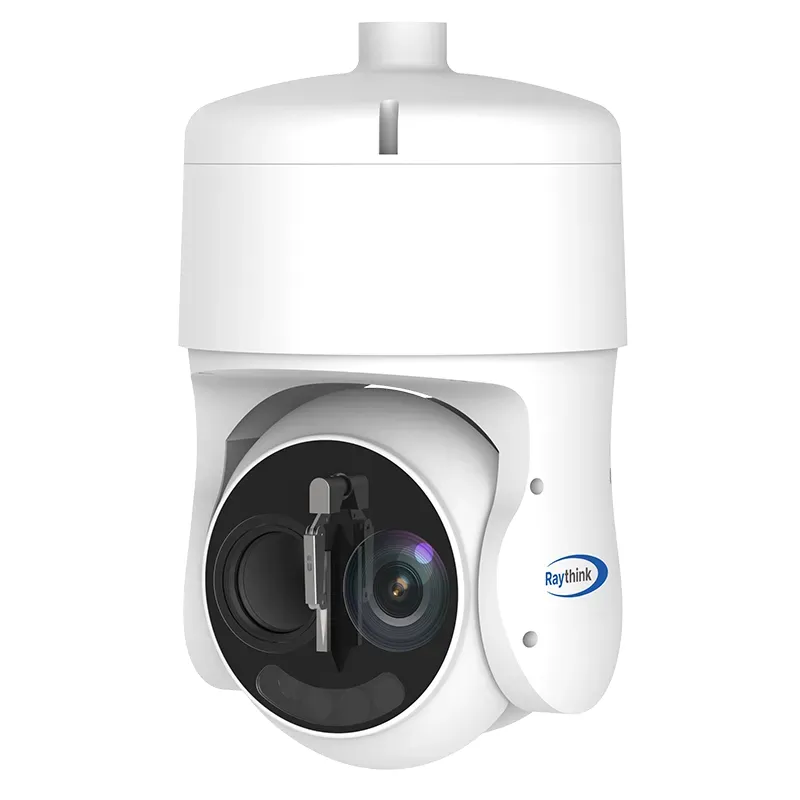
PD464T Dual-Spectrum Speed Dome Camera
2) Portable Handheld Substation Inspection
During routine inspections or on-site verification after anomaly alerts from online monitoring systems, maintenance personnel can use handheld thermal cameras to rapidly scan critical components like transformer bushings, switch contacts, and connection points. This enables precise localization of abnormal hot spots, assisting in determining the nature and severity of defects.
Handheld thermal cameras require no complex setup—they are ready to use immediately upon powering on, suiting multi-point, multi-device inspection needs. By complementing fixed online monitoring systems, they effectively reduce fault troubleshooting time, enhance on-site response efficiency, and provide robust technical support for the safe and stable operation of substations.

RM620 Handheld Thermal Camera

RT630 Expert Thermal Camera

RS600 Flagship Thermal Camera
6. Conclusion
In substation operations, the application of thermal imaging cameras—which operate based on non-contact temperature measurement—not only enhances inspection safety and efficiency but also provide more reliable technical means for equipment condition monitoring and preventive maintenance, laying a solid foundation for the long-term safe and stable operation of the power grid. To learn more about tailored deployment strategies of thermal imaging cameras in substations or discuss customized inspection solutions are better suited to actual operating conditions, please contact Raythink for a one-on-one professional consultation.
Recently Posted
-
International Day of Forests 2026: Safeguarding Forests and Economies with Thermal Imaging
April 24, 2026The theme of the International Day of Forests 2026, “Forests and Economies,” highlights the vital role forests play in supporting Read More
 -
Raythink Releases EV Lithium-ion Battery Thermal Safety White Paper
April 21, 2026As electric vehicles (EVs) continue their rapid global adoption, ensuring high-energy lithium-ion battery safety has become a crit Read More
 -
Application of Gas Detection Thermal Cameras in Environmental Monitoring
April 16, 2026In industrial production, energy transportation, cold chain operation and other scenarios, the leakage of VOCs (Volatile Organic C Read More
 -
Raythink’s AI-Powered Thermal Outdoor Security Cameras Protect Communities and Assets
April 14, 2026As winter conditions continue to impact parts of the United States and Europe, organizations are once again facing operational cha Read More

Contact Us
Recommended Products
-
 WN2 Imaging Thermal Module | Uncooled 12μm Infrared Camera Core With Multi-Resolution OptionsNegotiableMOQ: 1 Box
 -
640×512 High Resolution Uncooled Infrared OGI Camera RG630F for Petrochemical Gas SafetyUS$ 99999MOQ: 1 Set
-
RG630F AI Powered Handheld OGI Camera for Non-Contact Industrial Gas Leak Visual DetectionUS$ 99999MOQ: 1 Set
-
High-Sensitivity RG630C OGI Camera With Real-Time Gas Leak Monitoring & GPS TrackingNegotiableMOQ: 1 Set
-
Industrial-Grade RG630C OGI Camera for Oil, Gas and Petrochemical Leak MaintenanceNegotiableMOQ: 1 Set

-
AI-Powered RG630C Camera for Methane, Ammonia and SF6 Gas Leak VisualizationNegotiableMOQ: 1 Set
-
High-Resolution RG630C OGI Camera Compliant With EPA Appendix K for Gas Leak InspectionsNegotiableMOQ: 1 Set
-
RG630C Handheld OGI Camera for Non-Contact Visual Gas Leakage Detection & Safety MonitoringNegotiableMOQ: 1 Set
-
EX10 Infrared Thermal Imager for Precise HVAC Efficiency & Circuit Overheating ChecksNegotiableMOQ: 100 Sets
-
High-Performance EX10 Thermal Camera Enhancing Safety in Electrical MaintenanceNegotiableMOQ: 100 Sets
-
EX10 Thermal Imaging Device for Accurate Electrical & HVAC InspectionsNegotiableMOQ: 100 Sets
-
PC464A1 IP66 Rated Dual-Spectrum PTZ Camera With Thermal Imaging and 500m Surveillance RangeNegotiableMOQ: 100 Pieces
-
Raythink PC464A1 Dual-Spectrum PTZ Camera for Long-Range Perimeter Security and Fire DetectionNegotiableMOQ: 100 Pieces
-
PC464A1 Dual-Spectrum PTZ Camera With 30x Optical Zoom and AI Analytics for Critical Infrastructure SecurityNegotiableMOQ: 100 Pieces
-
High-Resolution 1280×1024 Uncooled VOx Infrared Thermal Imaging Module With LY300 ASICNegotiableMOQ: 1 Box
-
Long Wave Infrared Thermal Imaging Module TC 2-C With LY300 ASIC for Industrial MonitoringNegotiableMOQ: 1 Box
-
WN2 Series Uncooled Infrared Module With High-Frame-Rate 12μm WLP Detector for Intelligent Platform IntegrationNegotiableMOQ: 1 Box
-
RT630 Rugged Thermal Imaging Camera for Harsh Industrial Environments & Portable Electrical ChecksNegotiableMOQ: 50 Pieces
-
User-Friendly RT630 Thermal Camera With 8-Hour Battery & LCD Display for Field DiagnosticsNegotiableMOQ: 50 Pieces
-
Durable RT630 Thermal Imager With Enhanced Accuracy ±2°C/2% for Reliable Preventive MaintenanceNegotiableMOQ: 50 Pieces

