
 Business License

Why Can Infrared Thermal Camera Be Used for Building Inspections?
1. Industry Pain Points
With the rapid economic development, the scale of various construction projects has been expanding. However, affected by multiple factors in design, construction, and subsequent use, buildings often suffer from defects such as external wall hollowing, internal liquid leakage, and poor air tightness, which bring significant potential safety hazards to the overall stability of the building structure. Traditional inspection and evaluation are usually inefficient, only capable of detecting obvious defects, surface defects, or large-area hidden defects. Nevertheless, most defects are not obvious and can only be identified after causing serious damage, which then requires high reconstruction costs. As a preventive maintenance diagnostic technology, infrared thermal imaging technology does not require physical contact with roofs, ceilings, walls, or floors. It can also inspect inaccessible areas and present the condition of a large area in a single thermal image, making it an extremely economical and non-damaging disgnostic method for buildings themselves.


2. Why Can Infrared Thermal Camera Be Used for Building Inspections?
The heat capacity of normal parts of a building is inconsistent with that of damaged parts. Therefore, when the ambient temperature changes, the rate of temperature change damaged parts differs from that of normal parts. Infrared thermal cameras can visualize the temperature distribution of objects, featuring high sensitivity, fast detection, and no need for illumination. They accurately locate abnormal positions of buildings, improving the accuracy, efficiency, and rationality of inspections, and making building non-destructive testing (NDT) more scientific and practical. Additionally, the equipment is lightweight and portable, making it an ideal tool for building inspections.
3. Advantages of Infrared Thermal Imaging in the Construction Industry
1) Non-contact and Long-distance Inspection: No damage to the building structure, no need to set up scaffolding.
2) Fast and Comprehensive Inspection: Enables rapid, thoroughreal-time scanning and imaging of buildings.
3) Intuitive and Visual Inspection Results: Two-dimensional infrared thermal imaging intuitively displays the temperature field at each point of the measured object, accurately locating defect positions and showing the size of defect areas.
4) Comprehensive Functions of Intelligent Temperature Analysis Software: Facilitates further temperature analysis of images on computers.
5) Accurate Measurement: Inputinformation such as target distance, target emissivity, and ambient temperature to automatically calculate and correct the impact of atmospheric transmittance and target surface emissivity on measurement results.

4. What Building Problems Can Thermal Imagers Detect?
1) Detection of external wall hollowing and decorative surface bonding defects

2) HVAC (Heating, Ventilation, and Air Conditioning) Inspections

3) Air Tightness Testing

4) Leakage and Moisture Detection

5. Raythink Product Recommendations

Recently Posted
-
International Day of Forests 2026: Safeguarding Forests and Economies with Thermal Imaging
April 24, 2026The theme of the International Day of Forests 2026, “Forests and Economies,” highlights the vital role forests play in supporting Read More
 -
Raythink Releases EV Lithium-ion Battery Thermal Safety White Paper
April 21, 2026As electric vehicles (EVs) continue their rapid global adoption, ensuring high-energy lithium-ion battery safety has become a crit Read More
 -
Application of Gas Detection Thermal Cameras in Environmental Monitoring
April 16, 2026In industrial production, energy transportation, cold chain operation and other scenarios, the leakage of VOCs (Volatile Organic C Read More
 -
Raythink’s AI-Powered Thermal Outdoor Security Cameras Protect Communities and Assets
April 14, 2026As winter conditions continue to impact parts of the United States and Europe, organizations are once again facing operational cha Read More

Contact Us
Recommended Products
-
 WN2 Imaging Thermal Module | Uncooled 12μm Infrared Camera Core With Multi-Resolution OptionsNegotiableMOQ: 1 Box
 -
640×512 High Resolution Uncooled Infrared OGI Camera RG630F for Petrochemical Gas SafetyUS$ 99999MOQ: 1 Set
-
RG630F AI Powered Handheld OGI Camera for Non-Contact Industrial Gas Leak Visual DetectionUS$ 99999MOQ: 1 Set
-
High-Sensitivity RG630C OGI Camera With Real-Time Gas Leak Monitoring & GPS TrackingNegotiableMOQ: 1 Set
-
Industrial-Grade RG630C OGI Camera for Oil, Gas and Petrochemical Leak MaintenanceNegotiableMOQ: 1 Set

-
AI-Powered RG630C Camera for Methane, Ammonia and SF6 Gas Leak VisualizationNegotiableMOQ: 1 Set
-
High-Resolution RG630C OGI Camera Compliant With EPA Appendix K for Gas Leak InspectionsNegotiableMOQ: 1 Set
-
RG630C Handheld OGI Camera for Non-Contact Visual Gas Leakage Detection & Safety MonitoringNegotiableMOQ: 1 Set
-
EX10 Infrared Thermal Imager for Precise HVAC Efficiency & Circuit Overheating ChecksNegotiableMOQ: 100 Sets
-
High-Performance EX10 Thermal Camera Enhancing Safety in Electrical MaintenanceNegotiableMOQ: 100 Sets
-
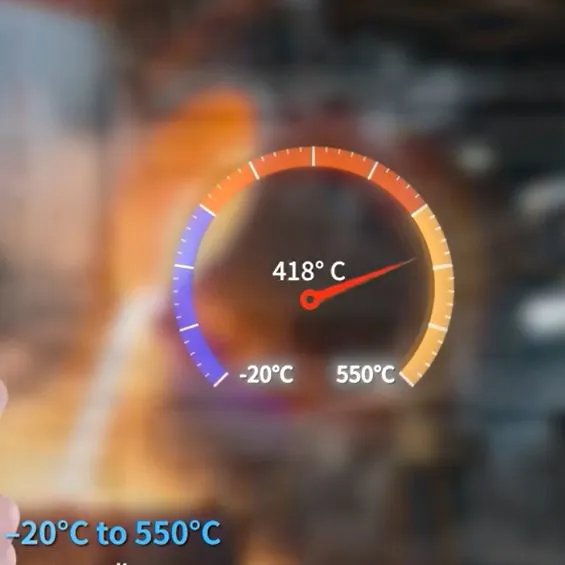
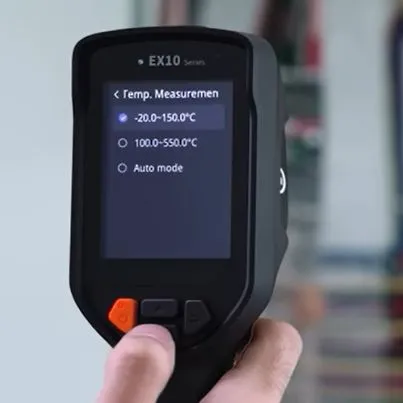
EX10 Thermal Imaging Device for Accurate Electrical & HVAC InspectionsNegotiableMOQ: 100 Sets
-
PC464A1 IP66 Rated Dual-Spectrum PTZ Camera With Thermal Imaging and 500m Surveillance RangeNegotiableMOQ: 100 Pieces
-
Raythink PC464A1 Dual-Spectrum PTZ Camera for Long-Range Perimeter Security and Fire DetectionNegotiableMOQ: 100 Pieces
-
PC464A1 Dual-Spectrum PTZ Camera With 30x Optical Zoom and AI Analytics for Critical Infrastructure SecurityNegotiableMOQ: 100 Pieces
-
High-Resolution 1280×1024 Uncooled VOx Infrared Thermal Imaging Module With LY300 ASICNegotiableMOQ: 1 Box
-
Long Wave Infrared Thermal Imaging Module TC 2-C With LY300 ASIC for Industrial MonitoringNegotiableMOQ: 1 Box
-
WN2 Series Uncooled Infrared Module With High-Frame-Rate 12μm WLP Detector for Intelligent Platform IntegrationNegotiableMOQ: 1 Box
-
RT630 Rugged Thermal Imaging Camera for Harsh Industrial Environments & Portable Electrical ChecksNegotiableMOQ: 50 Pieces
-
User-Friendly RT630 Thermal Camera With 8-Hour Battery & LCD Display for Field DiagnosticsNegotiableMOQ: 50 Pieces
-
Durable RT630 Thermal Imager With Enhanced Accuracy ±2°C/2% for Reliable Preventive MaintenanceNegotiableMOQ: 50 Pieces

