Business License

Advantages and Underlying Principles of Optical Gas Imaging Camera
With the continuous development of industrialization, flammable, explosive, and toxic gases have become ubiquitous in various aspects of our lives, either as products, raw materials, or by-products of industrial production. Once leaked, these gases not only pollute the environment but also pose a significant threat to human life and property, potentially causing poisoning, fires, and even explosions.
To mitigate these risks, it is imperative to develop a rapid, accurate, and safe detection method for remotely determining the location and scale of gas leaks.
Limitations of Traditional Gas Detection MethodsTraditional gas leak detection methods, such as bubble testing, funnel testing, or gas detectors, often suffer from the following shortcomings:
Intrusive detection requires production lines to be shut down, leading to downtime and potential damage to equipment.
Limited detection range necessitates proximity to potentially hazardous areas, posing safety risks to operators.
Due to the limited range of gases each device can detect, multiple detectors are necessary to ensure a wider detection spectrum.
Equipment is often bulky and unable to provide on-site results, hindering environmental inspections and timely leak repairs.
Measurement results are often abstract and data-intensive, making analysis difficult.
Small coverage areas require point-by-point or line-by-line inspections, consuming significant time and resources, and increasing the risk of undetected leaks in blind spots.
2. Safety and Efficiency
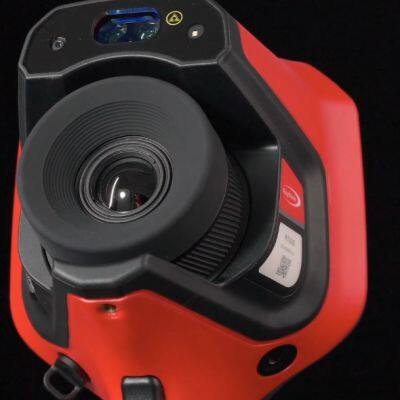
Optical gas imaging cameras enable non-contact, long-range, and large-scale detection of target areas. Infrared gas imaging cameras enable inspectors to pinpoint gas leaks precisely without entering hazardous zones, ensuring safe and efficient leak detection.
- 3. Continuous Operation of the Equipment Is Possible
Unlike traditional methods that require intrusive inspections and often cause equipment downtime, optical gas imaging cameras offer a non-contact solution, allowing for inspections without interrupting operations. This allows for continuous monitoring and detection of gas leaks, reducing production losses.
- How Does Optical Gas Imaging Work?
- The Basics: Gas Infrared Absorption Spectroscopy
- The Specific Principle of Absorption Characteristics and Wavelength Range
Absorption at Specific Wavelengths: Different gas molecules possess unique vibrational and rotational modes, corresponding to specific energy levels. When infrared radiation interacts with gas molecules, absorption only occurs when the energy of a photon precisely matches the energy difference between two energy levels of the molecule. Therefore, gas absorption of infrared radiation is selective and occurs only within specific wavelength ranges.
Quantized Energy Levels: Vibrational energy levels of molecules are quantized, meaning they can only exist at discrete energy levels. A molecule can only absorb an infrared photon and transition to a higher vibrational state when the photon’s energy precisely matches the energy difference between two quantized energy levels.
- Precondition for Gas to Absorb Infrared Radiation
Energy Match: As stated in the text, the energy of an infrared photon must precisely match the energy difference between two energy levels of a molecule for absorption to occur. This ensures that the molecule can only absorb specific energies, meaning the gas will only absorb infrared radiation at specific wavelengths.
Dipole Moment Change: The absorption process also requires that the vibrational transition of a molecule must be accompanied by a change in its instantaneous dipole moment. This change in dipole moment gives rise to absorption peaks, which is both a necessary and sufficient condition for the generation of infrared absorption spectra.
| Examples of Gases Detectable at Different Wavelengths | |
| Wavelengths | Detectable Gas Types |
| 7-14μm | CH₄, C₃H₈, SO₂, N₂O |
| 8.0-8.6μm | Refrigerant Gas |
| 10.3-10.8μm | SF₆, NH₃, C₂H₄ |
| 3.2-3.4μm | VOCs |
| 4.2-4.4μm | CO₂ |
| 4.5-4.7μm | CO |
Optical gas imaging (OGI) employs infrared cameras equipped with spectral filters to visualize otherwise invisible gas leaks. The working principle involves measuring infrared radiation transmitted through a volume of gas. By using band-pass filters placed in front of the detector, OGI cameras limit the range of wavelengths that can pass through, allowing for the detection of specific gases based on their unique infrared absorption spectra.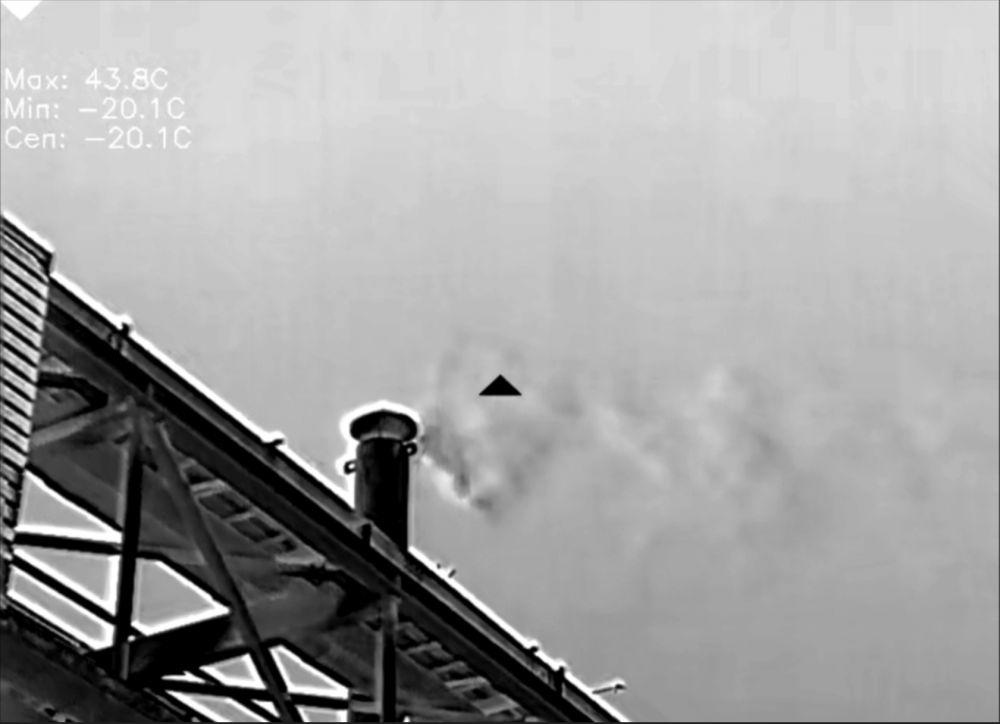
If there’s gas between the OGI camera and the target area, the infrared radiation passing through the gas will be absorbed at wavelengths corresponding to the filter’s passband. By using a narrowband filter centered on a wavelength where the gas exhibits strong absorption, the camera can enhance the visibility of the gas. The gas effectively “blocks” more radiation from objects behind it, creating a contrast in infrared intensity between the gas and the background.
The OGI camera is capable of detecting this differential infrared radiation and converting it into a visual thermal image.
Which Gases Can Optical Gas Imaging Cameras "See"? Can They Detect All Gases?Optical gas imaging cameras operate on the principle of selective absorption of infrared radiation by specific gases. The camera is equipped with a bandpass filter that allows only a narrow range of infrared wavelengths to pass through. Consequently, the camera can only detect gases that absorb infrared radiation within this specific wavelength range.
The ability of an OGI camera to detect a gas is directly related to the gas’s infrared absorption characteristics within the specific wavelength range of the filter. Gases that do not absorb infrared radiation within this range, such as helium, oxygen, and nitrogen, cannot be visualized. Moreover, different gases have different absorption spectra, which means gases with wavelengths beyond the OGI camera’s response range cannot be detected
Recently Posted
-
International Day of Forests 2026: Safeguarding Forests and Economies with Thermal Imaging
April 24, 2026The theme of the International Day of Forests 2026, “Forests and Economies,” highlights the vital role forests play in supporting Read More
 -
Raythink Releases EV Lithium-ion Battery Thermal Safety White Paper
April 21, 2026As electric vehicles (EVs) continue their rapid global adoption, ensuring high-energy lithium-ion battery safety has become a crit Read More
 -
Application of Gas Detection Thermal Cameras in Environmental Monitoring
April 16, 2026In industrial production, energy transportation, cold chain operation and other scenarios, the leakage of VOCs (Volatile Organic C Read More
 -
Raythink’s AI-Powered Thermal Outdoor Security Cameras Protect Communities and Assets
April 14, 2026As winter conditions continue to impact parts of the United States and Europe, organizations are once again facing operational cha Read More

Contact Us
Recommended Products
-
 WN2 Imaging Thermal Module | Uncooled 12μm Infrared Camera Core With Multi-Resolution OptionsNegotiableMOQ: 1 Box
 -
640×512 High Resolution Uncooled Infrared OGI Camera RG630F for Petrochemical Gas SafetyUS$ 99999MOQ: 1 Set
-
RG630F AI Powered Handheld OGI Camera for Non-Contact Industrial Gas Leak Visual DetectionUS$ 99999MOQ: 1 Set
-
High-Sensitivity RG630C OGI Camera With Real-Time Gas Leak Monitoring & GPS TrackingNegotiableMOQ: 1 Set
-
Industrial-Grade RG630C OGI Camera for Oil, Gas and Petrochemical Leak MaintenanceNegotiableMOQ: 1 Set

-
AI-Powered RG630C Camera for Methane, Ammonia and SF6 Gas Leak VisualizationNegotiableMOQ: 1 Set
-
High-Resolution RG630C OGI Camera Compliant With EPA Appendix K for Gas Leak InspectionsNegotiableMOQ: 1 Set
-
RG630C Handheld OGI Camera for Non-Contact Visual Gas Leakage Detection & Safety MonitoringNegotiableMOQ: 1 Set
-
EX10 Infrared Thermal Imager for Precise HVAC Efficiency & Circuit Overheating ChecksNegotiableMOQ: 100 Sets
-
High-Performance EX10 Thermal Camera Enhancing Safety in Electrical MaintenanceNegotiableMOQ: 100 Sets
-
EX10 Thermal Imaging Device for Accurate Electrical & HVAC InspectionsNegotiableMOQ: 100 Sets
-
PC464A1 IP66 Rated Dual-Spectrum PTZ Camera With Thermal Imaging and 500m Surveillance RangeNegotiableMOQ: 100 Pieces
-
Raythink PC464A1 Dual-Spectrum PTZ Camera for Long-Range Perimeter Security and Fire DetectionNegotiableMOQ: 100 Pieces
-
PC464A1 Dual-Spectrum PTZ Camera With 30x Optical Zoom and AI Analytics for Critical Infrastructure SecurityNegotiableMOQ: 100 Pieces
-
High-Resolution 1280×1024 Uncooled VOx Infrared Thermal Imaging Module With LY300 ASICNegotiableMOQ: 1 Box
-
Long Wave Infrared Thermal Imaging Module TC 2-C With LY300 ASIC for Industrial MonitoringNegotiableMOQ: 1 Box
-
WN2 Series Uncooled Infrared Module With High-Frame-Rate 12μm WLP Detector for Intelligent Platform IntegrationNegotiableMOQ: 1 Box
-
RT630 Rugged Thermal Imaging Camera for Harsh Industrial Environments & Portable Electrical ChecksNegotiableMOQ: 50 Pieces
-
User-Friendly RT630 Thermal Camera With 8-Hour Battery & LCD Display for Field DiagnosticsNegotiableMOQ: 50 Pieces
-
Durable RT630 Thermal Imager With Enhanced Accuracy ±2°C/2% for Reliable Preventive MaintenanceNegotiableMOQ: 50 Pieces