
 Business License

Troubleshooting HVAC Systems with Thermal Imaging Cameras
Thermal imaging has become an essential tool for HVAC maintenance and repair. Just as X-rays and MRIs are used for diagnosis and imaging in the medical field, thermal imaging plays a similar role in troubleshooting HVAC. Skilled technicians with infrared thermal imaging cameras can identify and diagnose HVAC system problems before they escalate.
So what are the main benefits of thermal imaging for HVAC troubleshooting? Today, let’s talk about the advantages of thermal cameras for HVAC and their specific applications in HVAC troubleshooting.
Benefits of Using Thermal Cameras for HVAC1. Early Detection of ProblemsOne of the primary advantages of thermal imaging is its ability to detect problems early. HVAC systems can have issues like leaks, blockages, or electrical faults that are hard to detect without specialized equipment. Thermal imaging identifies these problems by highlighting abnormal temperature patterns, allowing for timely repairs before minor issues escalate into costly ones.
2. Improved Energy EfficiencyWith thermal imaging cameras, HVAC professionals can identify areas where heat is escaping, optimizing system performance. For example, thermal imaging can reveal poor insulation performance or leakage of the pipeline, which can then be addressed to ensure the system runs efficiently, leading to lower energy consumption and reduced utility bills.
3. Non-Invasive InspectionInfrared thermal cameras allow for non-invasive inspections of HVAC systems. Technicians can diagnose issues without dismantling the system’s structure or disrupting the heat supply. This capability saves time and minimizes the risk of further damage during maintenance activities.
Key Applications of Thermal Imaging Cameras in HVAC Troubleshooting1. Thermal Pipeline Defect DetectionBecause of suffering under high temperatures and corrosive conditions for the long term, the thermal pipeline system can experience a variety of issues over time. These issues often manifest as temperature anomalies, so thermal imaging is an exceptionally effective method for detecting and diagnosing problems.
Thermal Imaging for Inspection and TroubleshootingDetecting Blockages: When a pipe becomes blocked due to scale buildup, debris, or other substances, a significant temperature difference emerges between the blocked and unobstructed sections. Thermal imaging can quickly identify these temperature anomalies, pinpointing the exact location of the blockage.
Identifying Thinning of Thermal Pipelines’ Inner Wall: Over time, the inner walls of pipes can thin due to erosion or corrosion. Over time, this could lead to pipe leaks. By visually displaying the temperature distribution variations on the pipe surface, infrared thermography allows inspectors to easily identify thinned areas and evaluate the scope of damage.
Locate the Leak Position: A pipe leak will cause a temperature difference between the area of the leak and the normal areas. Thermal imaging can easily detect these high-temperature areas, allowing technicians to quickly locate the leak.
Infrared thermal imaging provides a more efficient and accurate method for detecting underfloor heating leaks.
As the hot water pipes under the floor have a higher temperature than the surface of the floor, the heat from the hot water pipes is transferred to the floor through thermal conduction.
The thermal imager can quickly and clearly obtain the distribution of hot water pipes underground by using the temperature imaging capability of the thermal imaging camera. Based on this temperature distribution image, they can easily identify uneven heating, leaks, and other malfunctions, and pinpoint the location of these defects.
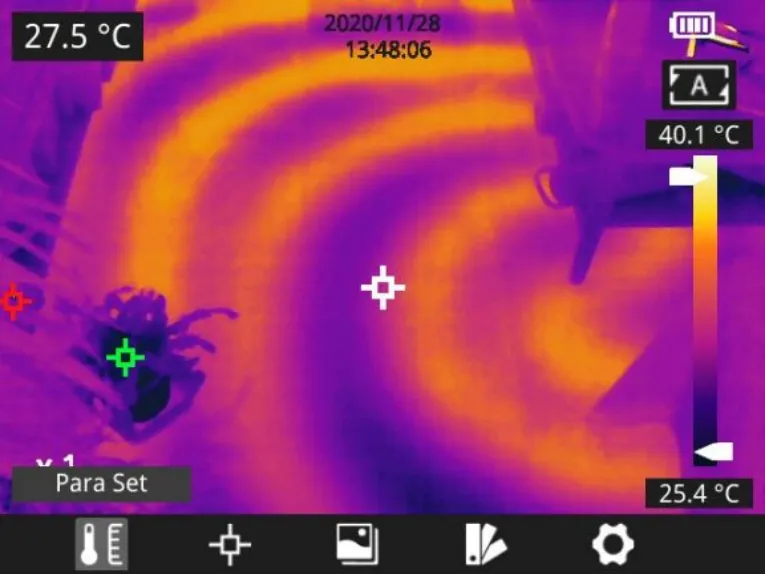
Furthermore, by utilizing thermal imaging cameras to pinpoint problem areas, the need for extensive floor excavation is significantly reduced. This enables shorter repair times and lower repair costs compared to traditional methods that often involve blind digging.
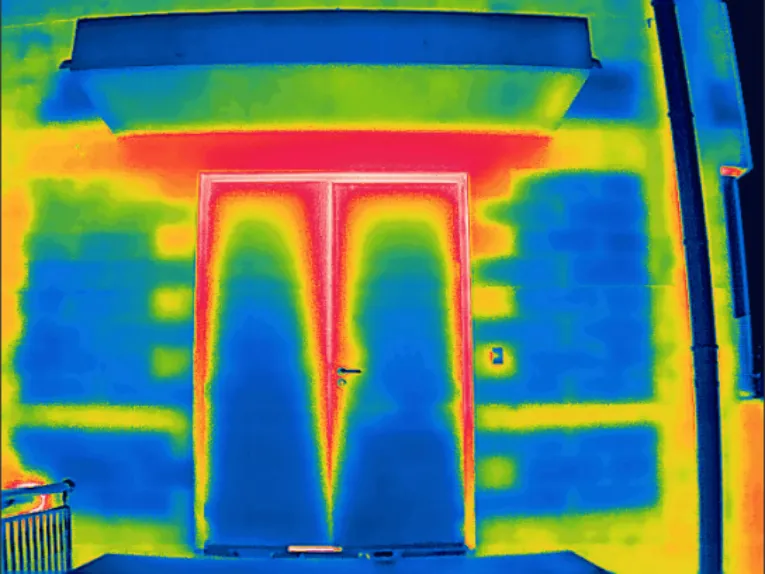
A specialized fan is installed in a sealable, adjustable door frame. The fan forces air into or out of the building, creating a pressure difference that causes air to exchange through gaps in doors, windows, and other parts of the building envelope. The blower door test should measure the building’s air exchange rate at pressure differences of 50 Pa and -50 Pa. This rate is used to calculate the number of air changes per hour, quantifying the overall airtightness of the building envelope. At the same time, an infrared thermal camera is used to identify leak sources, and a gas flow meter is also used to help pinpoint the exact location of leaks for sealing.
Recently Posted
-
International Day of Forests 2026: Safeguarding Forests and Economies with Thermal Imaging
April 24, 2026The theme of the International Day of Forests 2026, “Forests and Economies,” highlights the vital role forests play in supporting Read More
 -
Raythink Releases EV Lithium-ion Battery Thermal Safety White Paper
April 21, 2026As electric vehicles (EVs) continue their rapid global adoption, ensuring high-energy lithium-ion battery safety has become a crit Read More
 -
Application of Gas Detection Thermal Cameras in Environmental Monitoring
April 16, 2026In industrial production, energy transportation, cold chain operation and other scenarios, the leakage of VOCs (Volatile Organic C Read More
 -
Raythink’s AI-Powered Thermal Outdoor Security Cameras Protect Communities and Assets
April 14, 2026As winter conditions continue to impact parts of the United States and Europe, organizations are once again facing operational cha Read More

Contact Us
Recommended Products
-
 WN2 Imaging Thermal Module | Uncooled 12μm Infrared Camera Core With Multi-Resolution OptionsNegotiableMOQ: 1 Box
 -
640×512 High Resolution Uncooled Infrared OGI Camera RG630F for Petrochemical Gas SafetyUS$ 99999MOQ: 1 Set
-
RG630F AI Powered Handheld OGI Camera for Non-Contact Industrial Gas Leak Visual DetectionUS$ 99999MOQ: 1 Set
-
High-Sensitivity RG630C OGI Camera With Real-Time Gas Leak Monitoring & GPS TrackingNegotiableMOQ: 1 Set
-
Industrial-Grade RG630C OGI Camera for Oil, Gas and Petrochemical Leak MaintenanceNegotiableMOQ: 1 Set

-
AI-Powered RG630C Camera for Methane, Ammonia and SF6 Gas Leak VisualizationNegotiableMOQ: 1 Set
-
High-Resolution RG630C OGI Camera Compliant With EPA Appendix K for Gas Leak InspectionsNegotiableMOQ: 1 Set
-
RG630C Handheld OGI Camera for Non-Contact Visual Gas Leakage Detection & Safety MonitoringNegotiableMOQ: 1 Set
-
EX10 Infrared Thermal Imager for Precise HVAC Efficiency & Circuit Overheating ChecksNegotiableMOQ: 100 Sets
-
High-Performance EX10 Thermal Camera Enhancing Safety in Electrical MaintenanceNegotiableMOQ: 100 Sets
-
EX10 Thermal Imaging Device for Accurate Electrical & HVAC InspectionsNegotiableMOQ: 100 Sets
-
PC464A1 IP66 Rated Dual-Spectrum PTZ Camera With Thermal Imaging and 500m Surveillance RangeNegotiableMOQ: 100 Pieces
-
Raythink PC464A1 Dual-Spectrum PTZ Camera for Long-Range Perimeter Security and Fire DetectionNegotiableMOQ: 100 Pieces
-
PC464A1 Dual-Spectrum PTZ Camera With 30x Optical Zoom and AI Analytics for Critical Infrastructure SecurityNegotiableMOQ: 100 Pieces
-
High-Resolution 1280×1024 Uncooled VOx Infrared Thermal Imaging Module With LY300 ASICNegotiableMOQ: 1 Box
-
Long Wave Infrared Thermal Imaging Module TC 2-C With LY300 ASIC for Industrial MonitoringNegotiableMOQ: 1 Box
-
WN2 Series Uncooled Infrared Module With High-Frame-Rate 12μm WLP Detector for Intelligent Platform IntegrationNegotiableMOQ: 1 Box
-
RT630 Rugged Thermal Imaging Camera for Harsh Industrial Environments & Portable Electrical ChecksNegotiableMOQ: 50 Pieces
-
User-Friendly RT630 Thermal Camera With 8-Hour Battery & LCD Display for Field DiagnosticsNegotiableMOQ: 50 Pieces
-
Durable RT630 Thermal Imager With Enhanced Accuracy ±2°C/2% for Reliable Preventive MaintenanceNegotiableMOQ: 50 Pieces

